
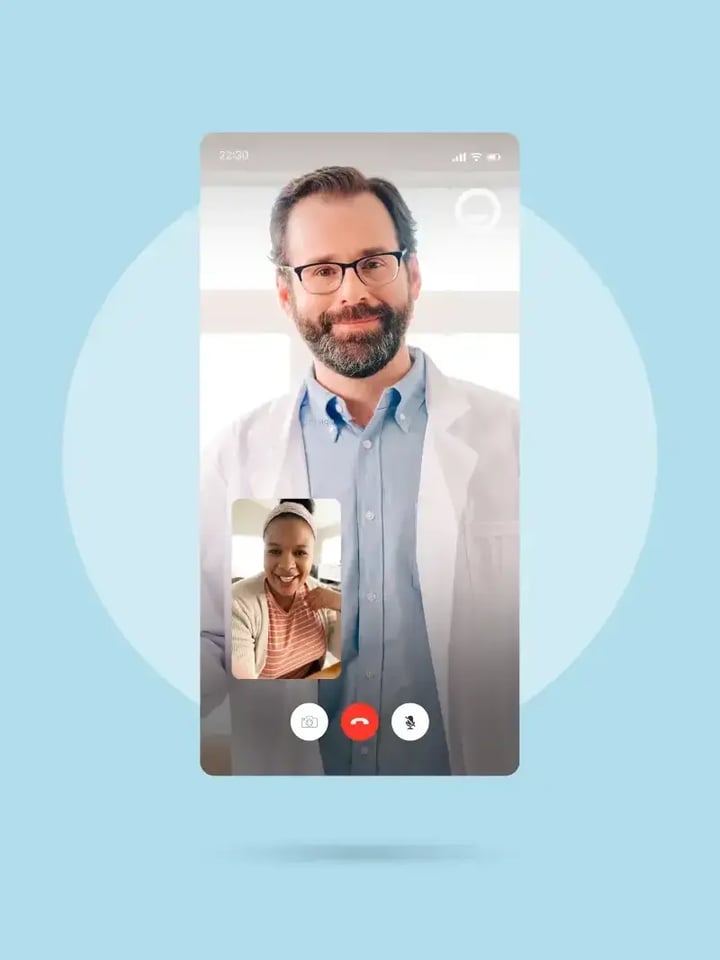
Menopause treatment available online today
In order to treat your menopause symptoms, consult with one of our board-certified doctors online today to prescribe medications to get relief from discomfort and mood changes. Get a new prescription to treat menopause symptoms or refill an existing prescriptions today.*
*Prescriptions are provided at the doctor's discretion. Learn more about our controlled substances policy and how to save up to 80% with our prescription discount card. PlushCare doctors cannot treat all cases of menopause. Our primary care physicians can conduct an initial evaluation of your symptoms, but may need to refer you to a specialist or for in-person treatment. If you are experiencing life-threatening symptoms, seek emergency medical attention immediately.
Learn about menopause
Menopause causes
There are a variety of menopause causes, ranging from the natural aging process to more severe conditions such as cancer. The most common cause of menopause is the natural aging process, typically between the ages of 45 and 55. However, there are several other potential menopause causes, including:
-
Cancer: One of the most serious potential menopause causes is cancer, specifically ovarian cancer. Ovarian cancer can cause the ovaries to stop functioning properly, leading to menopause.
-
Hormone disorders: Hormonal imbalances can also cause menopause. This typically occurs when the levels of estrogen and progesterone in the body are out of balance.
-
Medications: Certain medications, such as chemotherapy drugs, can also cause menopause. These drugs work by attacking the cells in the body, which can lead to the ovaries being damaged and eventually ceasing to function properly.
-
Oophorectomy: Oophorectomy is a surgical procedure involving removing one or both ovaries. This can lead to menopause, as the ovaries are responsible for producing estrogen.
Symptoms of menopause
Menopause is characterized by hot flashes. Many women describe it as sudden sensations of heat, combined with sweating and rapid heartbeat. Hot flashes can occur at any time, day or night. They may last from a few seconds to several minutes.
Other common symptoms include:
-
Vaginal dryness: As estrogen levels decline, the lining of the vagina becomes thinner and less elastic. This can cause discomfort during intercourse.
-
Mood changes: A person may experience mild irritability or severe depression during these changes.
If you are experiencing any of these symptoms, talk to your doctor about symptom relief.
How to treat menopause
There are a number of ways to treat symptoms of menopause, and effective treatments differ between patients. Some of them are:
Prescription medication:
-
Low dose antidepressants
-
Medicine for hormone therapy
OTC products: Several over-the-counter (OTC) products can help with symptoms. These include:
-
Antiperspirants and deodorants
-
Cooling products
-
Pain relievers
-
Sleep aids
If you are experiencing menopause symptoms, talk to your doctor about the risks and benefits of the different treatment option is right for you.
Menopause medications
Hormonal birth control
Vaginal estrogen
This can be in the form of a cream, tablet, or ring. It helps to improve vaginal dryness and itching. It can also help with hot flashes and night sweats. Vaginal estrogen does not help with mood changes or sleep problems.
Low-dose antidepressants
These can help with hot flashes, night sweats, mood changes, and sleep problems. Menopausal symptoms are commonly treated with selective serotonin reuptake inhibitors (SSRIs), a type of antidepressant.
Menopausal hormone therapy
This is also called hormone replacement therapy (HRT). It replaces the hormones that the body is no longer making. It can be taken as a pill, skin patch, gel, or vaginal cream. It can help with hot flashes, night sweats, and vaginal dryness.
There are a few things to keep in mind when taking menopause medications. First, be sure to take them as prescribed by your doctor. Second, don't stop taking the medication suddenly, as this can cause withdrawal symptoms. Finally, menopause medications can interact with other medications you're taking, so be sure to talk to your doctor about all the medications you're on. With the right menopause medication, you can enjoy relief from your symptoms and live a healthy life.
How to avoid menopause symptoms
Menopause is a natural time of change for every woman. It can be an exciting time, but it can also be a time when you feel like your body is betraying you. There are a few things that you can do to avoid feeling this way:
-
Eat a healthy diet
-
Get enough sleep
-
Exercise regularly
Menopause is a critical time in a woman's life. Talk to your doctor about any concerns that you have.
When to see a doctor for a menopause
Menopause treatment FAQs
What are symptoms of menopause?
Some women also experience hypoactive sexual desire disorder (HSDD).
When does menopause start?
What are some treatments for menopause?
3 simple steps to get treated for menopause today

Book a menopause treatment appointment.

Talk to your medical provider regarding your menopause symptoms.
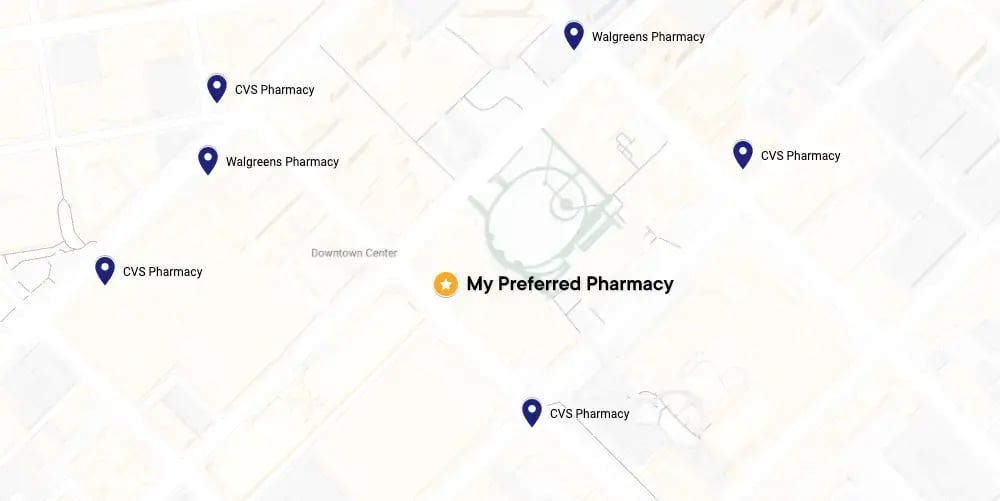
Pick up a prescription for menopause.
Menopause treatment pricing details
30 days of free membership
- Same-day appointments 7 days a week
- Unlimited messages with your Care Team
- Prescription discount card to save up to 80%
- Exclusive discounts on lab tests
- Free memberships for your family
- Cancel anytime
Paying with insurance
Membership
$19.99 /month
First month free
Visits
Copay
Visit price with insurance
Often the same as an office visit. Most patients with in-network insurance pay $30 or less!
We accept these insurance plans and many more:



Paying without insurance
Membership
$19.99 /month
First month free
Visits
$129
Visit price without insurance
Related conditions to menopause
A number of related conditions can occur around the same time as menopause. These include:
In addition, the risks of some other medication conditions increase:
Menopause treatment resources:
Sources:
PlushCare is dedicated to providing you with accurate and trustworthy health information.
-
Mayo Clinic. “Menopause - Symptoms and Causes.” Mayo Clinic, Mayo Foundation for Medical Education and Research, Accessed October 10, 2023, https://www.mayoclinic.org/diseases-conditions/menopause/symptoms-causes/syc-20353397
-
National Institute on Aging. “What Is Menopause?” U.S. Department of Health and Human Services, National Institutes of Health, Accessed October 10, 2023, https://www.nia.nih.gov/health/menopause/what-menopause
-
Cleveland Clinic. “Postmenopause: What to Expect.” Cleveland Clinic, Accessed October 10, 2023, https://my.clevelandclinic.org/health/diseases/21837-postmenopause
-
North American Menopause Society. “Menopause Guidebook.” NAMS, Accessed October 10, 2023, https://www.menopause.org/
PlushCare content is reviewed by MDs, PhDs, NPs, nutritionists, and other healthcare professionals. Learn more about our editorial standards and meet the medical team. The PlushCare site or any linked materials are not intended and should not be construed as medical advice, nor is the information a substitute for professional medical expertise or treatment.